A home does not need to be perfectly arranged to work well. It needs places where everyday things are easy to find, use and put away. In a small kitchen, laundry area or balcony, a shelf can help create those places without turning an entire room into a storage project.
For importers and retailers, this is also a useful way to explain a product. Begin with the routine it supports, then show the dimensions, construction and packing information that allow buyers to judge the actual item. A lifestyle image can illustrate an idea; it cannot establish a load rating or prove performance.
Start with the routine, not the number of shelves
Before choosing a unit, ask what happens in the space. Are cooking supplies used every day? Do laundry products need to stay together? Are pots taking over a balcony walkway? These questions help define the useful width, depth, shelf spacing and location.
Measure the available footprint as well as the height. Leave room for doors, drawers, walking routes and access to cleaning equipment. A tall unit is not automatically the best choice if its lower shelves are difficult to reach or its depth blocks movement.
Kitchen storage: make daily items easier to reach
Group items by use rather than filling every shelf. A basket for food containers, a space for unopened pantry goods and a separate area for cleaning supplies can make a storage unit easier to understand. Keep food and household chemicals separate, and follow the storage instructions on the products themselves.
For retail presentation, show the shelf footprint clearly and use a realistic number of everyday objects. Do not hide the product behind props. If an appliance is shown, check the shelf's documented load limits and the appliance's clearance and electrical requirements before recommending that use.
Laundry and utility areas: choose for the conditions
Consider splashes, cleaning access and the materials of every component. A PP shelf and a coated metal rack offer different constructions. Material names alone do not establish resistance to heat, chemicals, sunlight or long-term outdoor exposure.
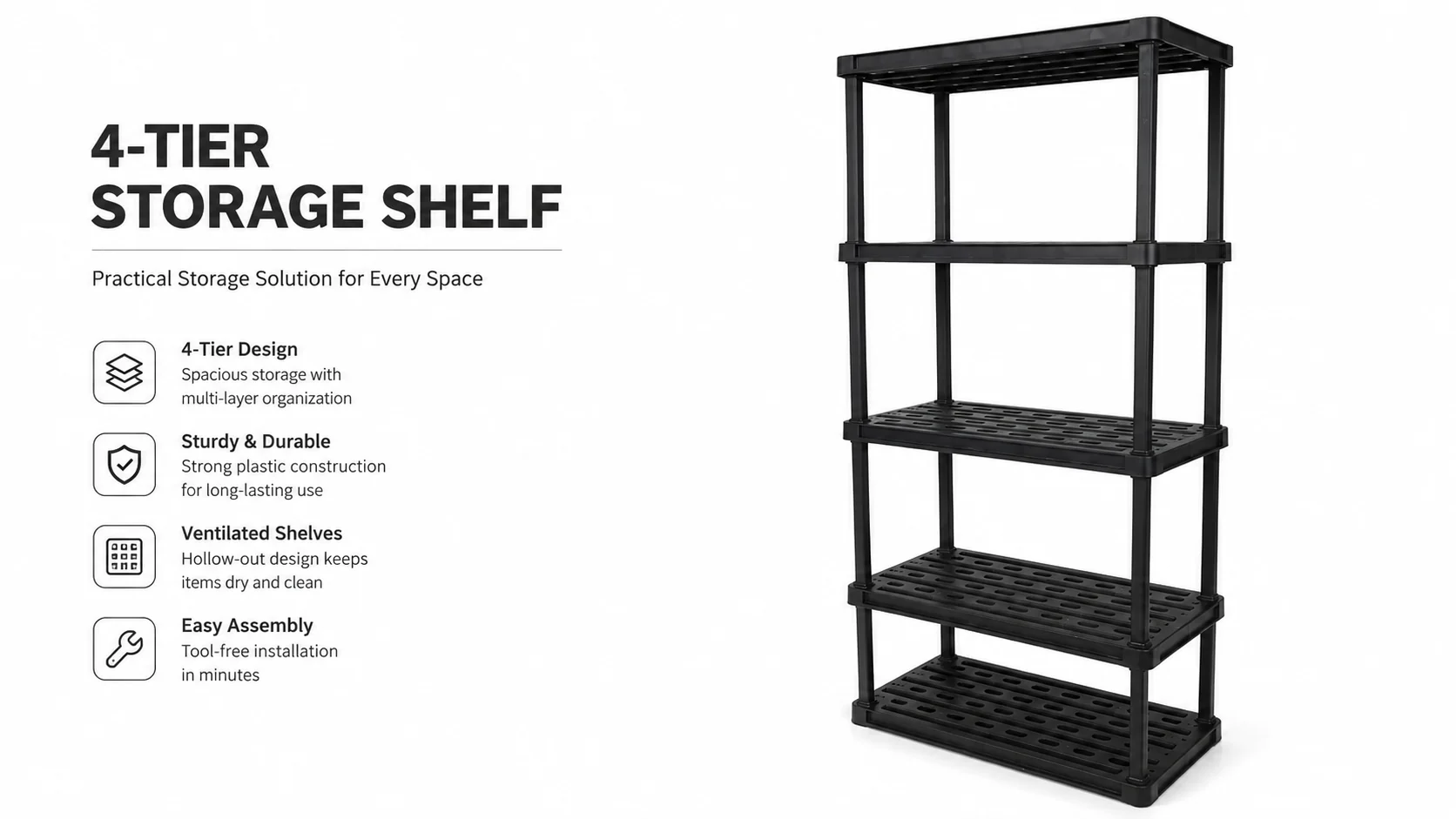
MUBANG's SO-US-001 PP utility shelving provides a multi-tier option for household organization. Review the current product page for the available configuration and confirmed specifications. Select a size that fits the space and the items being stored; do not treat all tier variants as having identical dimensions or packing.
Flexible spaces: consider what happens when storage is no longer needed
Some rooms serve more than one purpose. A temporary organization area may need to be cleared later, making a folding structure relevant to the choice. MUBANG's SO-SR-001 four-tier foldable storage rack is a carbon-steel design with a folding structure.
Compare both the working footprint and the stored size. Check the actual folding operation, locking points and instructions before use. Folding should be presented as a practical configuration feature, without inventing a folding time or implying that the unit can be moved safely while loaded.
Balcony storage: keep the space usable
A balcony may combine plants, cleaning tools and somewhere to sit. Plan a clear walking route and keep frequently used items accessible. Separate plant display from storage for items that should remain dry.
Check exposure before recommending any shelf outdoors. An indoor lifestyle photograph does not demonstrate weather resistance, and a balcony scene does not establish suitability for rain or direct sunlight. Match the final product specification and care instructions to the intended conditions.
Help customers see the value—and help buyers verify it
Retailers can explain a shelving range through a few focused scenes: a kitchen corner, a laundry area or a flexible utility space. Each scene should communicate one clear purpose. Pair it with a readable dimensions image and an actual product photograph so that the shopper can distinguish styling from the item being purchased.
- Show one realistic storage problem and a clear arrangement of objects.
- Keep product shape, shelf spacing and proportions consistent across images.
- Explain folding or tier options only for the configuration being offered.
- Provide dimensions, assembly guidance, care information and supported load limits.
- Give trade buyers carton dimensions, packing quantity and weights for the selected SKU.
For wholesale assortment planning, treat PP shelving and a foldable metal rack as separate choices rather than a fixed set. They can serve different routines and price positions. Evaluate packaging, samples and market requirements for each product before confirming a program.
A more useful home begins with a clear choice
The value of storage is not simply fitting more things into a room. It is making the space easier to use: knowing where something belongs, reaching it without unnecessary effort and leaving enough room for daily life.
For the technical purchasing checks behind a PP shelving decision, read our plastic utility shelving buyer guide. To discuss a retail or distribution range, contact MUBANG with the intended use, target market and required quantity. We can review the relevant product information without treating illustrative scenes as performance evidence.