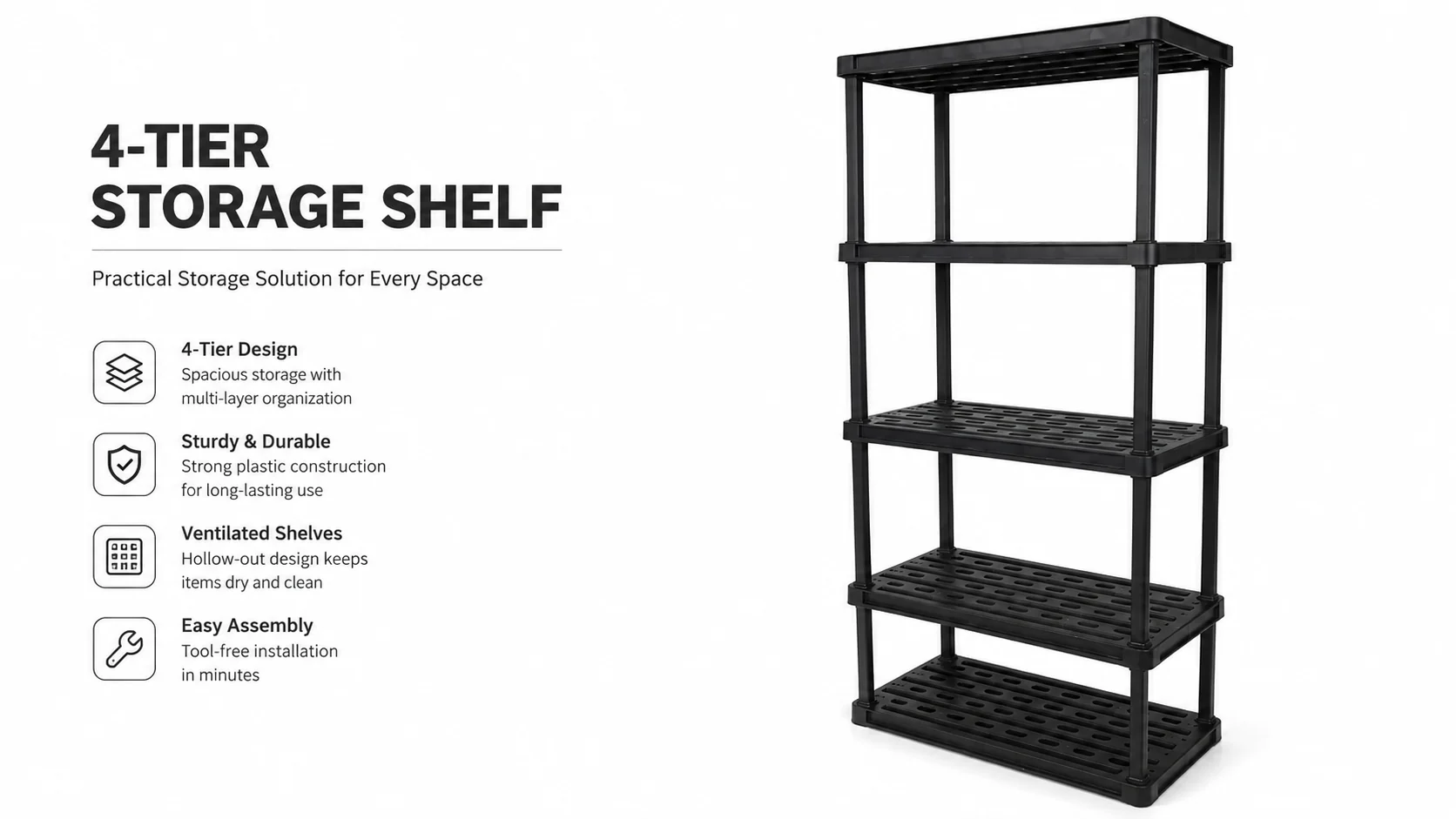
Plastic utility shelving may look simple, but a reliable sourcing decision depends on more than the number of tiers. Importers, retailers and distributors need to compare the product, its evidence and its packing method as one complete project.
1. Start with the intended use
Define where the shelving will be used and what will be stored. Household utility rooms, garages, offices and light commercial spaces create different expectations for dimensions, appearance and load performance. A supplier should not turn one internal test into a universal claim.
2. Confirm the material specification
Ask whether the shelves and posts use polypropylene, whether the resin is virgin or recycled, and which color masterbatch or additives are used. The answer affects consistency, appearance, odor and long-term performance. For the MUBANG utility shelving project, the confirmed material is virgin copolymer PP grade K8003 with a small amount of color masterbatch for the black version.
3. Compare complete dimensions—not only height
Width and depth determine usable storage space and retail positioning. MUBANG's series is approximately 70 cm wide and 38 cm deep, with 3-, 4- and 5-tier configurations. Buyers should also confirm carton dimensions and net and gross weight because these values directly affect container planning and landed cost.
4. Ask for load evidence with clear conditions
A load figure is meaningful only when the test method is explained. Check whether the load was evenly distributed, whether all tiers were loaded at the same time, how long the test lasted and whether the result is an internal test or an independent laboratory report.
In MUBANG's latest internal test, a four-tier unit supported a total static load of 124.85 kg for 24 hours and remained in good condition after testing. This is internal project evidence, not a certified public load rating. A target market or retailer may require additional third-party testing before a certified claim is used.
5. Evaluate assembly and packaging together
Tool-free construction can simplify the customer experience, but packaging must protect the panels and posts throughout transport. Review the assembly instructions, carton structure, labeling, barcode position and drop-test requirements before approving retail packaging.
6. Check private-label readiness
A useful OEM or ODM discussion should cover colors, branding, labels, instructions and retail packaging. Agree on what changes are possible, the minimum order quantity, sample approval and which details remain fixed by the existing tooling.
A practical RFQ checklist
- Intended market and sales channel
- Required number of tiers and target dimensions
- Expected use and load requirement
- Material and color requirements
- Packaging, label and instruction requirements
- Order quantity and destination port
- Required testing or compliance documents
A strong shelving quotation should make these points easy to verify. Clear product data reduces repeated questions, protects both buyer and supplier, and helps the project move from comparison to sample approval faster.